Home Blog Page 6

Facial Expressions: Getting the Greatest Angle for it

0

When creating an online portfolio to showcase your brand, style, and persona, you need to ask yourself questions like: “What is the best photo for this?”, “How do I convey all that I’m about?.” It might be best to start by asking these questions to loved ones as they know you best and your endeavors. They can pinpoint you in the right direction, so call up a friend or a family member that you talk to a lot and ask them the first three words that they think of when summarizing you.

It could be any number of things such as creative, loving, smart, funny, now look at what you tend to shoot. Still Life? Architecture? Models? Portraits? Landscape? Whichever the case, try to find the photos that express your personality. Start with that and then move on to answering the biggest question: “What would the audience or a potential employer want to see from your portfolio?”

Let’s answer that.

Main Shooting Style

If you tend to shoot landscapes, don’t have your portfolio be all about your very few portraits. Pick the best photos you’ve taken of mountaintops, sunrises, ocean waves, sunsets, the ones that you worked really hard on editing. Keep in mind to also show variety, don’t just choose the same sunrise shots over and over again.

Diversity is the key to everything, after all.

If you prefer shooting portraits, then pick ones that truly shine – where you’ve wholly aced that post-processing and skin retouching.

Originality

Have you ever asked yourself this question while taking photos: “I wonder what would happen if I moved this over here shot through a different lens with a blue filter on top?” If that question was too specific, don’t worry. The idea behind it is if you’ve ever experimented with photography, then you need to add that into your portfolio. We all appreciate originality, and you need to showcase those shots you were a little extra creative with. Whether you chose to buy a prism and create a rippling effect on your subject, or just simply took a photo from a new perspective, you need to add that to your online portfolio.

Editing Skills

Not just your photography skills, but your ability to work with an editing software just like Adobe Photoshop or even Lightroom can have a great impact on a potential employer. One of the best ways to convey that is by adding it to your CV or creating a fantasy-like effect on something ordinary.

Being able to work with anything is a plus.

Are you ready?

With all these tips and tricks on creating an online portfolio, are you now ready to create yours? Start by making a website using your preferred hosting service, and if you have coding knowledge, creating from scratch, if not, then choose a Theme that suits what you need. With the website built, start uploading your work and arranging it in a preferred order. You could also use a file service to create an online archive that you can link to instead when sharing your CV with a potential employer. However, having it on a website also increases your followers and watchers and builds your brand. This in turn, improves your chances of being self-employed and working on exactly what matters to you.

Create today, and improve tomorrow.

Professional Outfit Photoshoot: Revealing a Goddess

0

When creating an online portfolio to showcase your brand, style, and persona, you need to ask yourself questions like: “What is the best photo for this?”, “How do I convey all that I’m about?.” It might be best to start by asking these questions to loved ones as they know you best and your endeavors. They can pinpoint you in the right direction, so call up a friend or a family member that you talk to a lot and ask them the first three words that they think of when summarizing you.

It could be any number of things such as creative, loving, smart, funny, now look at what you tend to shoot. Still Life? Architecture? Models? Portraits? Landscape? Whichever the case, try to find the photos that express your personality. Start with that and then move on to answering the biggest question: “What would the audience or a potential employer want to see from your portfolio?”

Let’s answer that.

Main Shooting Style

If you tend to shoot landscapes, don’t have your portfolio be all about your very few portraits. Pick the best photos you’ve taken of mountaintops, sunrises, ocean waves, sunsets, the ones that you worked really hard on editing. Keep in mind to also show variety, don’t just choose the same sunrise shots over and over again.

Diversity is the key to everything, after all.

If you prefer shooting portraits, then pick ones that truly shine – where you’ve wholly aced that post-processing and skin retouching.

Originality

Have you ever asked yourself this question while taking photos: “I wonder what would happen if I moved this over here shot through a different lens with a blue filter on top?” If that question was too specific, don’t worry. The idea behind it is if you’ve ever experimented with photography, then you need to add that into your portfolio. We all appreciate originality, and you need to showcase those shots you were a little extra creative with. Whether you chose to buy a prism and create a rippling effect on your subject, or just simply took a photo from a new perspective, you need to add that to your online portfolio.

Editing Skills

Not just your photography skills, but your ability to work with an editing software just like Adobe Photoshop or even Lightroom can have a great impact on a potential employer. One of the best ways to convey that is by adding it to your CV or creating a fantasy-like effect on something ordinary.

Being able to work with anything is a plus.

Are you ready?

With all these tips and tricks on creating an online portfolio, are you now ready to create yours? Start by making a website using your preferred hosting service, and if you have coding knowledge, creating from scratch, if not, then choose a Theme that suits what you need. With the website built, start uploading your work and arranging it in a preferred order. You could also use a file service to create an online archive that you can link to instead when sharing your CV with a potential employer. However, having it on a website also increases your followers and watchers and builds your brand. This in turn, improves your chances of being self-employed and working on exactly what matters to you.

Create today, and improve tomorrow.

Using Tripod Lights for Product Shots from Above

0

When creating an online portfolio to showcase your brand, style, and persona, you need to ask yourself questions like: “What is the best photo for this?”, “How do I convey all that I’m about?.” It might be best to start by asking these questions to loved ones as they know you best and your endeavors. They can pinpoint you in the right direction, so call up a friend or a family member that you talk to a lot and ask them the first three words that they think of when summarizing you.

It could be any number of things such as creative, loving, smart, funny, now look at what you tend to shoot. Still Life? Architecture? Models? Portraits? Landscape? Whichever the case, try to find the photos that express your personality. Start with that and then move on to answering the biggest question: “What would the audience or a potential employer want to see from your portfolio?”

Let’s answer that.

Main Shooting Style

If you tend to shoot landscapes, don’t have your portfolio be all about your very few portraits. Pick the best photos you’ve taken of mountaintops, sunrises, ocean waves, sunsets, the ones that you worked really hard on editing. Keep in mind to also show variety, don’t just choose the same sunrise shots over and over again.

Diversity is the key to everything, after all.

If you prefer shooting portraits, then pick ones that truly shine – where you’ve wholly aced that post-processing and skin retouching.

Originality

Have you ever asked yourself this question while taking photos: “I wonder what would happen if I moved this over here shot through a different lens with a blue filter on top?” If that question was too specific, don’t worry. The idea behind it is if you’ve ever experimented with photography, then you need to add that into your portfolio. We all appreciate originality, and you need to showcase those shots you were a little extra creative with. Whether you chose to buy a prism and create a rippling effect on your subject, or just simply took a photo from a new perspective, you need to add that to your online portfolio.

Editing Skills

Not just your photography skills, but your ability to work with an editing software just like Adobe Photoshop or even Lightroom can have a great impact on a potential employer. One of the best ways to convey that is by adding it to your CV or creating a fantasy-like effect on something ordinary.

Being able to work with anything is a plus.

Are you ready?

With all these tips and tricks on creating an online portfolio, are you now ready to create yours? Start by making a website using your preferred hosting service, and if you have coding knowledge, creating from scratch, if not, then choose a Theme that suits what you need. With the website built, start uploading your work and arranging it in a preferred order. You could also use a file service to create an online archive that you can link to instead when sharing your CV with a potential employer. However, having it on a website also increases your followers and watchers and builds your brand. This in turn, improves your chances of being self-employed and working on exactly what matters to you.

Create today, and improve tomorrow.

Reflective Materials and How to Best Work with Them

0

When creating an online portfolio to showcase your brand, style, and persona, you need to ask yourself questions like: “What is the best photo for this?”, “How do I convey all that I’m about?.” It might be best to start by asking these questions to loved ones as they know you best and your endeavors. They can pinpoint you in the right direction, so call up a friend or a family member that you talk to a lot and ask them the first three words that they think of when summarizing you.

It could be any number of things such as creative, loving, smart, funny, now look at what you tend to shoot. Still Life? Architecture? Models? Portraits? Landscape? Whichever the case, try to find the photos that express your personality. Start with that and then move on to answering the biggest question: “What would the audience or a potential employer want to see from your portfolio?”

Let’s answer that.

Main Shooting Style

If you tend to shoot landscapes, don’t have your portfolio be all about your very few portraits. Pick the best photos you’ve taken of mountaintops, sunrises, ocean waves, sunsets, the ones that you worked really hard on editing. Keep in mind to also show variety, don’t just choose the same sunrise shots over and over again.

Diversity is the key to everything, after all.

If you prefer shooting portraits, then pick ones that truly shine – where you’ve wholly aced that post-processing and skin retouching.

Originality

Have you ever asked yourself this question while taking photos: “I wonder what would happen if I moved this over here shot through a different lens with a blue filter on top?” If that question was too specific, don’t worry. The idea behind it is if you’ve ever experimented with photography, then you need to add that into your portfolio. We all appreciate originality, and you need to showcase those shots you were a little extra creative with. Whether you chose to buy a prism and create a rippling effect on your subject, or just simply took a photo from a new perspective, you need to add that to your online portfolio.

Editing Skills

Not just your photography skills, but your ability to work with an editing software just like Adobe Photoshop or even Lightroom can have a great impact on a potential employer. One of the best ways to convey that is by adding it to your CV or creating a fantasy-like effect on something ordinary.

Being able to work with anything is a plus.

Are you ready?

With all these tips and tricks on creating an online portfolio, are you now ready to create yours? Start by making a website using your preferred hosting service, and if you have coding knowledge, creating from scratch, if not, then choose a Theme that suits what you need. With the website built, start uploading your work and arranging it in a preferred order. You could also use a file service to create an online archive that you can link to instead when sharing your CV with a potential employer. However, having it on a website also increases your followers and watchers and builds your brand. This in turn, improves your chances of being self-employed and working on exactly what matters to you.

Create today, and improve tomorrow.

The Colors of Happiness and Peace: Let’s Pastel it Up

0

When creating an online portfolio to showcase your brand, style, and persona, you need to ask yourself questions like: “What is the best photo for this?”, “How do I convey all that I’m about?.” It might be best to start by asking these questions to loved ones as they know you best and your endeavors. They can pinpoint you in the right direction, so call up a friend or a family member that you talk to a lot and ask them the first three words that they think of when summarizing you.

It could be any number of things such as creative, loving, smart, funny, now look at what you tend to shoot. Still Life? Architecture? Models? Portraits? Landscape? Whichever the case, try to find the photos that express your personality. Start with that and then move on to answering the biggest question: “What would the audience or a potential employer want to see from your portfolio?”

Let’s answer that.

Main Shooting Style

If you tend to shoot landscapes, don’t have your portfolio be all about your very few portraits. Pick the best photos you’ve taken of mountaintops, sunrises, ocean waves, sunsets, the ones that you worked really hard on editing. Keep in mind to also show variety, don’t just choose the same sunrise shots over and over again.

Diversity is the key to everything, after all.

If you prefer shooting portraits, then pick ones that truly shine – where you’ve wholly aced that post-processing and skin retouching.

Originality

Have you ever asked yourself this question while taking photos: “I wonder what would happen if I moved this over here shot through a different lens with a blue filter on top?” If that question was too specific, don’t worry. The idea behind it is if you’ve ever experimented with photography, then you need to add that into your portfolio. We all appreciate originality, and you need to showcase those shots you were a little extra creative with. Whether you chose to buy a prism and create a rippling effect on your subject, or just simply took a photo from a new perspective, you need to add that to your online portfolio.

Editing Skills

Not just your photography skills, but your ability to work with an editing software just like Adobe Photoshop or even Lightroom can have a great impact on a potential employer. One of the best ways to convey that is by adding it to your CV or creating a fantasy-like effect on something ordinary.

Being able to work with anything is a plus.

Are you ready?

With all these tips and tricks on creating an online portfolio, are you now ready to create yours? Start by making a website using your preferred hosting service, and if you have coding knowledge, creating from scratch, if not, then choose a Theme that suits what you need. With the website built, start uploading your work and arranging it in a preferred order. You could also use a file service to create an online archive that you can link to instead when sharing your CV with a potential employer. However, having it on a website also increases your followers and watchers and builds your brand. This in turn, improves your chances of being self-employed and working on exactly what matters to you.

Create today, and improve tomorrow.

How We Get a Mortgage with Bad Credit in Chicago (2025 Guide)

0

Chicago’s 2025 market is steady, influenced by Federal Reserve policies that have helped stabilize borrowing costs, with median home prices hovering near $350,000 across the city, and higher in spots like Lincoln Park. That price tag can feel out of reach with bad credit, but it isn’t. You can still own that dream home, whether it’s a Logan Square condo near the Blue Line or a Lincoln Park brownstone close to the Brown and Purple lines.

We’ve helped hundreds of Chicago families buy with credit scores below 580. That’s what we mean by bad credit, and it’s not the end of the road. FHA loans and flexible underwriting give real paths forward, especially when your income is strong, your debt is under control, or you have a larger down payment or a co-borrower.

Rates matter, so let’s set the stage. Keep in mind that the interest rate reflects the cost of borrowing, while the APR provides a fuller picture by including fees like closing costs. FHA 30-year fixed interest rates are running about 5.6% to 6.7% right now, which keeps monthly payments more predictable. Pair that with targeted concessions—such as seller contributions toward closing costs—and you can protect your budget, even if you’re paying more in interest than a top-tier borrower.

This guide is for you if you’re a first-time buyer eyeing Avondale or Pilsen, a growing family moving up in Lakeview or North Center, an investor weighing cash flow near transit in Albany Park, or a professional relocating with a tight timeline. We cover what works today in Chicago, from credit fixes that move scores fast to lender loan programs that actually close.

Local timing still matters. Apply before winter if you can, since snow can slow showings, inspections, and appraisals. Proximity to transit also helps value and lifestyle, whether you rely on the Blue Line to O’Hare, the Metra UP-North at Ravenswood, or quick access to the Kennedy and Lake Shore Drive.

You can buy in Chicago with less-than-perfect credit. We’ll show you how to structure your file, choose the right lender, and shop smart block by block, so the keys feel closer, not farther away.

What Bad Credit Means for Chicago Home Buyers in 2025

![A Chicago homebuyer reviewing loan options with a skyline view, neighborhood maps, and L train lines highlighted; winter streets, brownstones, and a River North high-rise with garage parking in frame. Image created with AI](generateImage?prompt=A realistic editorial-style scene of a Chicago homebuyer meeting with a mortgage advisor at a table, with papers showing loan options (FHA, VA, non-QM), a map of Chicago highlighting neighborhoods like Avondale, Logan Square, River North, and Pilsen, the L train lines visible on the map, and winter details outside the window (snow, bundled pedestrians). Include a cozy brownstone street view and a modern River North high-rise with a visible garage entry. Natural lighting, professional tone, diverse people, accurate Chicago skyline in background. No text in the image.&size=1200×800) Securing a mortgage with less-than-perfect credit in Chicago takes planning, but it is very possible. We see wins every week, from Avondale investors using alternative financing to first-time buyers pairing FHA with down payment help. The key is matching your profile to the right program, then structuring fees, credits, and property choices around your budget, commute, and winter realities.

Common Myths About Bad Credit Mortgages Debunked

You might think it is impossible, but here is why it is not. The myth that you cannot get approved below 600 is wrong. FHA will consider credit scores down to 500 with 10 percent down, and 580 with 3.5 percent down, per published guidance on FHA loan requirements. Many banks apply overlays and set higher cutoffs, but that is a lender policy, not FHA policy.

Another myth is that Illinois assistance is off limits with lower scores. Many IHDA programs target 640 for first-timers, yet they offer flexible down payment help and vary by product and lender. See available options on the IHDA lending programs page.

For Chicago context, investors in up-and-coming Avondale often use non-QM loans when tax returns do not fit standard rules. We have closed files where a 560 FICO buyer put 10 percent down on a South Side two-flat, documented steady rent, and locked a fair interest rate after cleaning up one late. Another borrower at 598 FICO bought a Pilsen condo with FHA after paying down a small auto loan and adding a co-borrower. Lenders like Gustan Cho Associates, known for no-overlay FHA and VA, can help when big banks say no.

Chicago’s 2025 Market Snapshot for Low Credit Buyers

The true cost of borrowing matters most when credit is bruised. On a $500,000 purchase, most Chicago lenders charge about 2,500 to 5,000 in origination fees, plus other upfront fees that are harder to negotiate. You can often negotiate by: asking for a lender credit in exchange for a slightly higher interest rate, comparing no-overlay FHA lenders, and pushing sellers for closing credits on homes that sit through winter. To get the full picture, buyers should understand the difference between interest rate and APR, and calculate APR on offers to fully grasp the APR impact over time.

Location choices help your debt-to-income ratio. Living near the L can trim car costs, which gives breathing room in underwriting. River North condos with garage parking sell at a premium because winter is brutal and parking saves time, tickets, and stress. In older brownstones, plan for higher heating in January and February. Set aside a monthly reserve so your budget stays strong even if interest rates sit above prime tiers.

We often send first-time buyers to compare loans at FHA.com’s requirement page, then layer IHDA down payment assistance. Move-up buyers in Lakeview or North Center should price in larger property taxes. Investors near transit in Albany Park can offset higher interest rates with stronger rent comps.

Top Loan Options to Secure with Bad Credit in Chicago

![A Chicago couple reviewing FHA, VA, and USDA loan options at a kitchen table, with a map showing Pilsen, Lakeview, and areas near O’Hare, winter streets outside, and the L in the background. Image created with AI](generateImage?prompt=A realistic editorial-style image of a Chicago couple in their late 20s to early 30s reviewing mortgage options labeled FHA, VA, USDA on printed sheets, at a kitchen table with a laptop, calculator, and coffee. A wall map highlights Pilsen, Lakeview, and areas northwest toward O’Hare, with CTA L lines sketched. Outside the window, a winter Chicago street with light snow, brownstones, and a passing L train is visible. Bright, natural lighting, professional tone, diverse people, accurate Chicago details. No text in the image.&size=1200×800) Bad credit does not shut the door in Chicago. It shifts the strategy. The best mortgage options build on flexible underwriting, stable payments, and local realities like winter showings and CTA commutes. We focus on tried-and-true programs that close, then tailor the down payment, fees, and monthly budget to your neighborhood and timeline, always considering how interest rates factor into the overall affordability.

FHA Loans: Easiest Path for First-Time Chicago Buyers

FHA is the go-to for scores at 580 and up, with only 3.5 percent down, backed by the government. The rules are clear, which is why closings are reliable—especially with fixed interest rates that ensure predictable monthly payments over 30 years. See the basics on FHA loan requirements, and compare loans with IHDA assistance programs for additional down payment help tailored to Illinois buyers.

Example: a $300,000 Pilsen condo with $10,500 down. Upfront mortgage insurance premium adds about 1.75 percent to the loan, which increases the principal borrowed and impacts the APR, while a monthly mortgage insurance premium stays for most of the term, further influencing the APR and total loan cost when combined with interest. We keep it simple by using seller credits and lender credits to offset closing costs, helping you avoid surprises in the actual borrowing expense.

Why it fits ages 25 to 35: lower down payment, predictable 30-year payments, and approvals that account for thin credit or a past late. For those exploring alternatives, note that variable interest rates in non-QM options can introduce uncertainty, unlike the stability of FHA. We have helped many young couples near the Pink Line buy their first place and still afford transit, parking, and winter heating. Before deciding, consider a comparison of two offers to weigh FHA against VA or USDA based on your eligibility and interest rate projections.

  • Best for: first-time buyers, credit rebuilding
  • Watch for: MIP in both upfront and monthly forms

VA and USDA Options for Eligible Chicago Residents

For eligible service members and veterans, VA means zero down, no PMI, and strong interest rates that make it ideal for quick moves. We see fast approvals for buyers in Lakeview and North Center who want space and a short Brown Line commute—review the loan agreement details on the VA site for VA home loan eligibility.

USDA fits income-qualified buyers on the far edges, typically beyond city limits and into suburban pockets northwest of O’Hare, offering low interest rates and approvals that often move faster before winter slows appraisals. Confirm areas and income thresholds on the USDA eligibility map, keeping an eye on how these rates contribute to long-term savings.

  • VA: zero down, strong for relocators on tight timelines
  • USDA: low rates in eligible suburban zones, good pre-winter target

Step-by-Step Guide to Getting Your Chicago Mortgage with Bad Credit
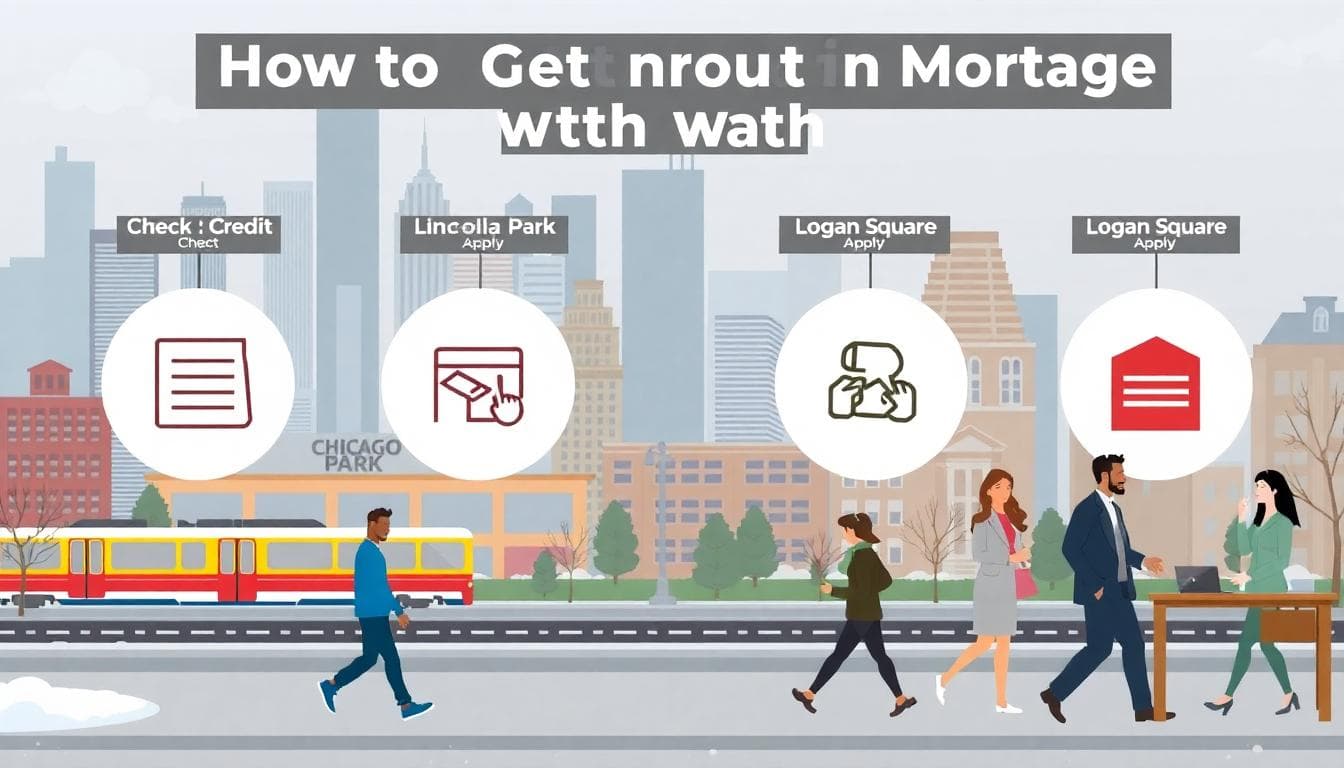
An editorial-style visual showing a step-by-step mortgage path in Chicago with icons for credit check, lender search, and application, set against the skyline, L tracks, and winter streets. Image created with AIImage created with AI

Buying with less-than-perfect credit in Chicago takes a clear plan and tight execution. We start with fast credit wins, then line up lenders who actually approve low-score files. Timing matters here, since Chicago’s fall-to-winter cycle can tighten appraisals and slow showings. If you want a Lincoln Park brownstone or a Logan Square condo near the Blue Line, this step-by-step approach keeps your file strong, your costs contained, and your commute in mind.

Improving Your Credit Score Quickly for Better Terms

Small wins add up in 3 to 6 months. We attack three levers first: fix errors, pay on time, and drop credit use—while managing overall debt, including student loans, to keep your profile lean. Pull all three reports, dispute mistakes, and get balances below 30 percent of limits. Avoid putting large city bills, like ticket or tax payments, on your credit card, since that spikes utilization. Automate minimums, then snowball extra cash to the smallest revolving balance for faster ratio relief. We have seen 50-point jumps by month three when clients stay consistent. Do this before your Lincoln Park hunt so you qualify for a better interest rate and lower cost of borrowing over the loan term, which can significantly reduce your overall expenses. When evaluating options, it’s key to understand the difference between interest rate and APR: the nominal interest rate is the base cost of the loan, while the annual percentage rate (APR) provides a fuller picture by including fees and other charges, as required under the Truth in Lending Act. Always calculate APR for different rate options to see the true picture—especially if considering discount points to buy down the rate for long-term savings. For a simple roadmap, see Bankrate’s guide on improving credit before a mortgage.

  • Quick wins: dispute errors, pay on time, cut utilization
  • Timeline: 3 to 6 months for a meaningful boost

Finding and Working with Chicago Lenders Who Say Yes

Target a lender known for approvals with bruised credit. We often recommend Gustan Cho Associates and Lennar Mortgage for flexible underwriting and non-overlay FHA loan files. Ask for application or underwriting fee waivers, and do a comparison of two offers to evaluate origination fees alongside lender credits that can offset closing costs. Investors should request non-QM loan or DSCR options. Tie your case to stable job locations near the L or Metra, since easy commutes can support DTI. Start your file before the holiday rush, when appraisers book out and interest rates can bounce—pay close attention to the APR in those quotes to gauge the full impact. For a broader view of who is active in Illinois, scan the latest list of best Illinois mortgage lenders, then call IHDA-partner shops for down payment help.

Chicago-Specific Tips to Close Your Bad Credit Mortgage Deal

![A Chicago street scene in winter with the L train, a Lincoln Park brownstone, and colorful Pilsen two-flats; a buyer reviewing a condo budget with HOA, taxes, and utilities noted. Image created with AI](generateImage?prompt=A realistic editorial image of Chicago in winter featuring the CTA L train passing near a Lincoln Park brownstone block and colorful two-flats in Pilsen. In the foreground, a homebuyer reviews a budget sheet showing condo HOA, property taxes, and utilities. Snow on sidewalks, visible street parking, and a Metra train in the distance. Natural lighting, accurate Chicago architectural details, no text.&size=1200×800) Buying with less-than-perfect credit in Chicago is about smart tradeoffs and timing. We focus on neighborhoods that fit your payment, then pressure-test the budget for condo fees, taxes, and winter utilities. The goal is a clean approval on your loan and monthly payments you can live with when January hits.

Navigating Neighborhoods and Hidden Costs in Chicago

Lincoln Park commands a premium for schools, lakefront access, and Brown Line convenience. Pilsen often delivers stronger price-per-square-foot value with quick access to the Pink Line and a growing dining scene. Condo buyers should budget for HOA fees, which can push all-in costs higher than expected and impact your APR when factoring in property taxes. Recent reports show Chicago condo fees trending up, which changes your monthly affordability and debt-to-income math—remember, these fees and taxes don’t reduce the principal balance of your loan. See an example breakdown of all-in condo costs in this market from a local source at Luxury Chicago Condos. Add winter utilities to your checklist too, since older masonry buildings can spike heating bills in January and February, further influencing your overall APR.

Timing Your Purchase Around Chicago’s Seasons and Trends

Spring brings more listings, better showings, and faster appraisals. We aim to go under contract in April or May, then avoid December closings when snow slows inspections and moving—potentially qualifying for seller credits to offset closing costs. Pricing shifted modestly citywide in recent data, though hot pockets can outpace averages, affecting the total loan cost across neighborhoods. Track current city trends with Zillow’s Chicago housing market update. For commuters, proximity to CTA and Metra can offset housing costs by cutting car expenses and parking stress. Suburban buyers targeting UP-North or BNSF lines often find better value with an easy rail ride downtown. Time your rate lock with your lender to secure a favorable interest rate and inspection windows to avoid weather delays, as higher rates can increase your interest expense over the long-term life of the loan.

Conclusion

We covered the playbook that works in Chicago today. FHA loans, VA loans, non-QM, and select IHDA-assisted options give real paths with scores under 600, while Illinois 30-year fixed interest rates sit in the mid 6 percents as of October 2025, with many FHA quotes landing in the high 5s to low 6s. Follow the steps you saw here, build quick credit wins, pick a no-overlay lender, and pressure-test the budget for the cost of borrowing, HOA fees, taxes, and winter utilities.

Keep it local and tactical. Most Chicago lenders charge between 2,500 and 5,000 in origination fees on a 500,000 purchase, so ask for lender credits, compare fees across two to three shops—including the APR and annual percentage rate to look beyond the stated interest rate—and pair seller credits with a clean file. Choose homes that fit your commute and DTI, near the Brown or Blue Line, close to Metra UP-North or BNSF if you are suburban, and weigh garage parking in River North or Lincoln Park since winter shifts pricing and comfort.

We have helped hundreds of Chicago families close this year, even with bruised credit. Book a free consult, or reach out to your short list of lenders today, then lock a plan before the next cold snap slows inspections and appraisals—understanding the total loan cost is crucial. Your next step is simple, get preapproved, set a budget, and shop block by block. The keys to your favorite neighborhood, from Logan Square to Pilsen, are within reach.


Best Chicago Neighborhoods for First-Time Buyers Under $400K

0

Best Chicago Neighborhoods for First-Time Buyers Under $400K

Breaking into Chicago’s housing market might seem daunting for first-time buyers, but the Windy City still offers plenty of vibrant neighborhoods where you can find a quality home under $400,000. From historic districts with character-filled bungalows to up-and-coming areas with modern condos, these affordable pockets of Chicago provide the perfect balance of value, amenities, and community for those making their first home purchase.

Chicago skyline with affordable neighborhoods highlighted in the foreground

Chicago’s Housing Market for First-Time Buyers

While Chicago’s median home price has risen to $372,000 (up 7% from last year), many neighborhoods still offer excellent value for first-time buyers with budgets under $400K. The average Chicago home sells after just 32 days on market—faster than the national average—making it essential to know which neighborhoods offer the best combination of affordability and amenities.

First-time buyers in Chicago face unique challenges and opportunities. The city’s diverse neighborhoods each have their own character, transit options, and price points. Understanding which areas offer the best value for your budget is crucial before beginning your home search.

Chicago real estate market graph showing prices under $400K by neighborhood

Top Chicago Neighborhoods for First-Time Buyers Under $400K

We’ve analyzed dozens of Chicago neighborhoods to identify the best options for first-time buyers with budgets under $400,000. These areas offer the perfect combination of affordability, amenities, and growth potential.

1. Bronzeville

Historic row houses in Bronzeville, one of the best Chicago neighborhoods for first-time buyers under $400K

4.2 Overall Rating

4.2 Affordability

4.5 Transit Access

4.3 Amenities

3.8 Growth Potential

Price Range: $200K-$350K Home Types: Condos, Row Houses Commute: 15-20 min

During much of the 20th century, Bronzeville was the epicenter of African American cultural life in Chicago. Today, this Near South Side neighborhood offers some of the best value for first-time buyers, with historic row houses and condos in prewar buildings available well under $400K.

The area is home to the Illinois Institute of Technology, which brings youthful energy and has spurred development. Recent investments from developers and public agencies have delivered new housing, retail establishments, and infrastructure improvements.

Top Amenities:

  • Historic Black Metropolis-Bronzeville district with landmark buildings
  • Proximity to the lakefront and 31st Street Beach
  • Easy access to the Green Line “L” train
  • Growing restaurant scene along 47th Street

Pros

  • Historic architecture with character
  • Strong appreciation potential
  • Rich cultural heritage
  • Affordable entry point

Cons

  • Some areas still developing
  • Fewer retail options than North Side
  • Some properties need renovation

Explore Bronzeville Homes

2. South Loop

Modern condo buildings in South Loop with Chicago skyline view

Price Range: $250K-$400K Home Types: Condos, Lofts Commute: 5-10 min

The South Loop offers an incredible opportunity to live within walking distance of downtown Chicago while staying under the $400K budget. This vibrant area has transformed from its industrial past into a residential hotspot with converted lofts in Printer’s Row and modern high-rises near Grant Park.

While the West Loop and Streeterville have mostly outpriced first-time buyers, the South Loop still offers one-bedroom and smaller two-bedroom condos under $400K. The neighborhood continues to develop with new buildings from renowned architects, including a 76-story tower by Rafael Viñoly.

4.3

Overall Rating

Affordability

3.8

Transit Access

4.7

Amenities

4.5

Growth Potential

4.2

Top Amenities:

  • Walking distance to Grant Park, “Chicago’s front yard”
  • Multiple “L” train lines and bus routes
  • Museum Campus with Field Museum, Shedd Aquarium, and Adler Planetarium
  • Soldier Field and Northerly Island concert venue

Pros

  • Excellent downtown access
  • Abundant cultural attractions
  • Great public transportation
  • Lakefront recreation

Cons

  • Higher HOA fees
  • Smaller living spaces
  • Limited street parking

Explore South Loop Homes

3. Uptown

Vintage apartment buildings in Uptown Chicago with residents walking on tree-lined streets

4.1

Overall Rating

Affordability

4.1

Transit Access

4.4

Amenities

4.0

Growth Potential

3.9

Price Range: $200K-$375K Home Types: Condos, Vintage Apartments Commute: 25-30 min

With its mix of lakefront high-rises and cozy blocks of prewar apartment buildings, Uptown is one of the North Side’s most diverse and affordable communities. The neighborhood offers excellent value for first-time buyers, with two-bedroom condos in vintage buildings available below $300,000.

By stretching to $400,000, buyers can find properties with updated finishes, in-unit laundry, and off-street parking. Recent upgrades along the Red Line—including the $203 million renovation of the Wilson Avenue stop—have improved transit access and spurred development.

Top Amenities:

  • Historic entertainment venues like the Aragon Ballroom and Riviera Theatre
  • Montrose Beach and Harbor
  • Diverse international dining scene along Broadway
  • Red Line “L” access with express trains downtown

Pros

  • Architectural character
  • Cultural diversity
  • Lakefront access
  • Strong rental market

Cons

  • Older buildings may need updates
  • Some areas still transitioning
  • Limited parking options

Explore Uptown Homes

Find Your Perfect Chicago Neighborhood

Still exploring your options? Get personalized neighborhood recommendations based on your budget and preferences.Get Neighborhood Recommendations

4. Beverly

Tree-lined street in Beverly with classic Chicago bungalows and Tudor-style homes

4.4

Overall Rating

Affordability

4.2

Transit Access

3.7

Amenities

4.3

Growth Potential

4.4

Price Range: $250K-$400K Home Types: Bungalows, Tudors, Colonials Commute: 35-45 min

A budget of $400,000 goes a long way in Beverly, a historic South Side neighborhood known for its architectural diversity and strong sense of community. This hub for Chicago’s Irish community offers bungalows, Tudors, and colonials with yards spacious enough for entertaining and gardening.

Beverly features a robust art scene—anchored by the 40,000-square-foot Beverly Arts Center—and active civic groups. Many residents tout its sense of stability, thanks to large numbers of multigenerational families who have called the neighborhood home for decades.

Top Amenities:

  • Beverly Arts Center with gallery space and performance venue
  • Dan Ryan Woods for hiking and outdoor recreation
  • Metra Rock Island line with express service to downtown
  • Local shopping and dining along Western Avenue

Pros

  • Single-family homes with yards
  • Strong community feel
  • Excellent schools
  • Lower crime rates

Cons

  • Longer commute to downtown
  • Limited nightlife options
  • Fewer public transit options

Explore Beverly Homes

5. Old Irving Park

Mix of Victorian homes and new construction in Old Irving Park, Chicago

4.0

Overall Rating

Affordability

3.7

Transit Access

4.2

Amenities

3.9

Growth Potential

4.2

Price Range: $350K-$400K Home Types: Bungalows, New Construction Commute: 25-30 min

Known for its distinguished Victorians and classic Chicago bungalows, Old Irving Park has witnessed a wave of single-family home construction attracting young families seeking more space without leaving the city. Recent sales of new construction homes have ranged between $500,000 and $600,000, but first-time buyers can still find options under $400K.

The neighborhood offers excellent transportation options with the Blue Line, Metra, and Kennedy Expressway all providing quick access to downtown. The Villa district, a landmark area of more than a hundred prewar houses, offers particular charm and character for buyers seeking vintage homes.

Top Amenities:

  • Independence Park with playground and sports facilities
  • Blue Line and Metra access
  • Growing restaurant scene along Milwaukee Avenue
  • Proximity to the 606 trail

Pros

  • Mix of vintage and new homes
  • Good transportation options
  • Family-friendly atmosphere
  • Strong appreciation potential

Cons

  • Limited inventory under $400K
  • Some areas need commercial development
  • Competition for well-priced homes

Explore Old Irving Park Homes

6. Pullman

Historic red brick row houses in Pullman, a national monument site in Chicago

3.9

Overall Rating

Affordability

4.7

Transit Access

3.4

Amenities

3.3

Growth Potential

4.2

Price Range: $150K-$250K Home Types: Row Houses, Single-Family Commute: 35-45 min

Pullman offers first-time buyers a unique opportunity to own a piece of American history. This Far South Side neighborhood features rows of narrow red-brick houses designed by architect Solon S. Beman in the 1880s for workers at the Pullman railcar factory. A renovated historic home can be had for around $250,000, with unimproved properties available for much less.

The entire area was designated a national monument in 2015, drawing new investment from the National Park Service and creating a strong sense of community pride. Residents describe Pullman as a small but vibrant community where neighbors know each other and work together on improvement projects.

Top Amenities:

  • Pullman National Monument Visitor Center
  • Historic Arcade Park
  • Metra Electric District line
  • Annual Historic Pullman House Tour

Pros

  • Historic landmark properties
  • Extremely affordable
  • Strong community bonds
  • National Park Service investment

Cons

  • Limited dining and shopping
  • Longer commute to downtown
  • Many homes need renovation

Explore Pullman Homes

7. West Loop

Modern loft buildings and restaurants in West Loop, Chicago

3.8

Overall Rating

Affordability

3.0

Transit Access

4.5

Amenities

4.8

Growth Potential

3.9

Price Range: $325K-$400K Home Types: Condos, Lofts Commute: 10-15 min

The West Loop is Chicago’s hottest neighborhood, with investors pouring hundreds of millions into transforming former meatpacking facilities into tech offices, upscale restaurants, and residential lofts. While many properties exceed the $400K mark, determined first-time buyers can still find smaller units and studios in this highly desirable area.

Home to Google, McDonald’s corporate headquarters, and more than a dozen of the city’s top restaurants along Randolph Street’s “Restaurant Row,” the West Loop offers an urban lifestyle with excellent proximity to downtown. The neighborhood continues to develop rapidly, making it a potentially strong investment for buyers who can get in under $400K.

Top Amenities:

  • World-class dining scene on Randolph Street
  • Fulton Market District shops and galleries
  • Multiple CTA “L” lines and bus routes
  • Mary Bartelme Park

Pros

  • Premier dining and nightlife
  • Walking distance to downtown
  • Strong appreciation potential
  • Urban, walkable lifestyle

Cons

  • Limited options under $400K
  • Small living spaces
  • High demand creates competition

Explore West Loop Homes

8. Berwyn

Chicago-style bungalows and vibrant commercial street in Berwyn

4.2

Overall Rating

Affordability

4.6

Transit Access

4.0

Amenities

3.9

Growth Potential

4.3

Price Range: $200K-$350K Home Types: Bungalows, Single-Family Commute: 25-35 min

Technically a suburb but with an urban feel, Berwyn markets itself as “nothing like a suburb” in campaigns targeting city-dwelling millennials. Located just 10 miles west of the Loop, this community offers a high concentration of affordable Chicago-style bungalows, many available for less than $250,000.

The town features buzzing street life along Roosevelt Road, home to the celebrated music venue FitzGerald’s and critically acclaimed restaurants like Autre Monde. With lower property taxes than many neighboring suburbs and excellent transportation options, Berwyn offers first-time buyers city amenities at suburban prices.

Top Amenities:

  • FitzGerald’s music venue
  • Diverse dining scene along Roosevelt Road
  • Multiple Metra stations and CTA Pink Line nearby
  • Proksa Park with nature areas and recreation facilities

Pros

  • Affordable single-family homes
  • Lower property taxes than Chicago
  • Strong bungalow preservation
  • Growing arts community

Cons

  • Not within Chicago city limits
  • Some areas need commercial development
  • Older housing stock may need updates

Explore Berwyn Homes

Neighborhood Comparison for First-Time Buyers

Each neighborhood offers different advantages for first-time buyers. Use this comparison table to help determine which area best matches your priorities and lifestyle needs.

NeighborhoodMedian PriceHome TypesCommute TimeTransit ScoreSchool RatingGrowth Potential
Bronzeville$275,000Condos, Row Houses15-20 min82/1006/10High
South Loop$345,000Condos, Lofts5-10 min95/1007/10High
Uptown$290,000Condos, Vintage Apts25-30 min86/1006/10Medium
Beverly$325,000Bungalows, Tudors35-45 min68/1008/10Medium
Old Irving Park$375,000Bungalows, New Const.25-30 min78/1007/10High
Pullman$185,000Row Houses35-45 min65/1005/10Medium-High
West Loop$385,000Condos, Lofts10-15 min92/1007/10Medium
Berwyn$250,000Bungalows25-35 min72/1006/10High

Tips for First-Time Buyers in Chicago

Navigating Chicago’s real estate market as a first-time buyer can be challenging. Here are some actionable tips to help you find the right neighborhood and home within your $400K budget.

Financing Options

First-time homebuyer reviewing mortgage options with a lender in Chicago
  • Illinois Housing Development Authority (IHDA) programs offer down payment assistance up to $10,000 for first-time buyers.
  • FHA loans allow down payments as low as 3.5% with credit scores of 580+.
  • Chicago Home Buyer Assistance Program provides grants of up to 7% of the total loan amount.
  • VA loans offer zero down payment options for veterans and service members.

Neighborhood Research

Couple exploring a Chicago neighborhood, checking out local amenities
  • Visit at different times – Check out neighborhoods during weekdays, evenings, and weekends to get a complete picture.
  • Use the “L” train to explore areas and test potential commutes before committing.
  • Attend community events like farmers markets and street festivals to get a feel for neighborhood culture.
  • Check crime statistics through the Chicago Police Department’s online data portal.

Property Considerations

First-time buyer inspecting a Chicago bungalow with a home inspector
  • Budget for assessments – Condo HOA fees in Chicago can range from $200-$800+ monthly.
  • Consider property taxes – They vary significantly by neighborhood and can impact affordability.
  • Factor in winter costs – Older homes may have higher heating bills during Chicago’s cold winters.
  • Check for permits on any renovations, especially in vintage buildings.

Emerging Neighborhoods to Watch

These areas aren’t on our main list yet but show promising signs for first-time buyers willing to get in early:

  • Humboldt Park – Western sections still offer values under $400K with proximity to the beautiful 207-acre park.
  • Avondale – North of Logan Square with similar amenities but more affordable housing stock.
  • Bridgeport – Historic working-class neighborhood with growing arts scene and proximity to downtown.
  • McKinley Park – Centrally located with good transit and a large park, still flying under the radar.

Finding Your Chicago Home Under $400K

Chicago continues to offer excellent opportunities for first-time homebuyers with budgets under $400,000. Whether you prioritize a short commute, architectural character, family-friendly amenities, or investment potential, there’s a neighborhood that fits your needs and budget.

The key is to balance your must-haves with your nice-to-haves and be open to exploring areas you might not have initially considered. Chicago’s 77 official community areas each have their own unique character and advantages for first-time buyers.

Ready to Find Your Chicago Neighborhood?

Get personalized recommendations and see available properties in neighborhoods that match your budget and lifestyle.Start Your Chicago Home Search

FHA vs. Conventional vs. VA Loans Comparison: Choose the Right Mortgage for 2025

0

Buying a home feels exciting, until you hit the wall of loan choices. The FHA loan, conventional loan, and VA loan each promise something different. Lower down payment, better rates, no mortgage insurance, special perks. Which one should you pick?

This FHA vs Conventional vs VA loans comparison breaks down the basics in plain language. You will see how they differ on down payments, credit score needs, mortgage insurance, eligibility, and common costs. By the end, you will know which loan fits your credit, savings, and situation, especially if an FHA loan is on your radar.

What Are FHA, Conventional, and VA Loans? Get the Basics Straight

A mortgage broker and client discussing loan options in a modern office setting.
Photo by RDNE Stock project

FHA Loans: Ideal for First-Time Buyers with Modest Savings

FHA loans are insured by the Federal Housing Administration. They exist to help people who have limited savings or lower credit scores qualify for a mortgage, making an FHA loan a popular choice for those building their financial foundation. With a 580 FICO score, you can put as little as 3.5% down on an FHA loan. If your score is 500 to 579, plan on 10% down. FHA loans require mortgage insurance for the life of the loan, and an upfront fee of 1.75% that most borrowers roll into the loan amount.

Why people choose an FHA loan: easier approval with flexible qualification standards, including lenient DTI ratio requirements, flexible credit rules, and the option to use gift funds for the down payment. For a deeper overview of how FHA stacks against other options in 2025, see this guide on low down payment loans from The Mortgage Reports.

Conventional Loans: Flexible Options for Stronger Credit Profiles

Conventional loans are not backed by the government. Banks, credit unions, and lenders offer these conforming loans with rules set by Fannie Mae and Freddie Mac. A conventional loan can put as little as 3% down, though 20% down helps you avoid private mortgage insurance (PMI). If you put less than 20% down, PMI is required, but you can cancel it once you reach 80% loan-to-value.

These conventional loans tend to reward higher credit with better interest rates and lower fees. They also have higher loan limits than FHA in many counties, and they do not charge an upfront guarantee fee. For a current comparison of FHA vs. conventional terms and rates, review this 2025 breakdown from The Mortgage Reports.

VA Loans: Top Benefits for Veterans and Active Service Members

VA loans are backed by the Department of Veterans Affairs. Eligible service members, veterans, and some surviving spouses can buy with 0% down and no monthly mortgage insurance through a VA loan. There is a one-time VA funding fee, about 2.15% for first-time use with zero down, and you can roll it into the loan.

Lenders often look for a 620 score, but VA loan guidelines are flexible and consider your full credit profile. For a clear look at how VA stacks against FHA, check this comparison from Bankrate.

Key Differences in Down Payments, Credit Scores, and Costs: Side-by-Side Breakdown

Choosing between an FHA loan, conventional loan, and VA loan comes down to cash needed upfront, credit strength, and long-term costs. Use this quick scan to align with your situation.

Down Payment Requirements: How Much Cash Do You Need Upfront?

  • FHA loan: Minimum 3.5% down with a 580 score. You can use gift funds or down payment assistance. A 500 to 579 score needs 10% down.
  • Conventional loan: Minimum 3% down for first-time buyers on many conforming loans programs. Put 20% down to skip PMI and lower monthly costs.
  • VA loan: True 0% down for eligible borrowers. No monthly mortgage insurance. A one-time funding fee applies.

Impact on monthly payments:

  • Lower down payments mean higher loan balances, so your monthly payment rises.
  • Conventional loan borrowers who put 20% down avoid PMI, which reduces monthly cost.
  • FHA loan and low-down conventional loans add monthly insurance, which increases the payment.
  • VA loan skips monthly insurance, which helps the payment even at 0% down.

For more perspective on when each structure is worth it, this lender explainer on FHA vs. VA tradeoffs can help you compare fees and insurance types: AD Mortgage’s FHA vs VA overview.

Credit Score Thresholds: Which Loan Fits Your Score Best?

Loan TypeTypical Minimum ScoreWhat That Means For YouFHA580 for 3.5% down (500 to 579 needs 10%)Easier approval if credit is bruisedConventional620 for most programsBetter rates as scores riseVAFlexible, many lenders prefer 620Compensating factors can help approvals

Simple rule of thumb:

  • Under 620: FHA loan is usually the path, unless you are VA-eligible and a lender can approve you—keep in mind your overall credit score profile.
  • 620 and up: Conventional loan often wins on long-term cost.
  • Service members and veterans: VA loan usually delivers the best overall value thanks to no monthly insurance.

Insurance and Fees: Hidden Costs That Add Up Over Time

FHA loan, conventional loan, and VA loan handle risk differently, and that changes your total cost.

  • FHA mortgage insurance: Upfront MIP of 1.75%, plus annual MIP for the life of the loan—ongoing mortgage insurance that covers the lender’s risk. Typical annual MIP is about 0.55% of the loan balance.
  • Conventional PMI: Applies with less than 20% down, but you can cancel it once you reach 80% loan-to-value. Costs vary by credit and down payment.
  • VA funding fee: One-time funding fee, often 2.15% for first use with zero down, and no monthly mortgage insurance. Some borrowers are exempt.

Example on a $300,000 loan amount:

  • FHA: Upfront MIP of 1.75% equals $5,250 (often financed into closing costs). Annual MIP at 0.55% is about $1,650 per year, or around $138 per month, for as long as you keep the FHA loan.
  • Conventional with 5% down and average credit: PMI might land near 0.5% annually, about $1,500 per year, or $125 per month, until you reach 80% loan-to-value. Then it can fall off.
  • VA first-time use with 0% down: A 2.15% funding fee equals $6,450, paid once or financed into closing costs. No monthly mortgage insurance.

Curious how lenders weigh FHA versus VA costs in practice? This breakdown from Bankrate outlines typical fees and underwriting differences. You can also scan a multi-loan comparison, including 2025 commentary, here: Agave Home Loans’ 2025 overview.

Pros and Cons of Each Loan: Weigh Your Options to Choose Wisely

When FHA Loans Shine and When They Fall Short

  • Pros
    • Low down payment with 580 score for an FHA loan.
    • Flexible credit standards and higher tolerance for DTI ratio in FHA loan approvals.
    • Gift funds allowed for down payment and closing costs on an FHA loan.
  • Cons
    • Mortgage insurance for the life of the FHA loan.
    • Upfront MIP adds to your financed balance.
    • Loan limits can reduce buying power compared to conventional loans in some areas.

Best fit: buyers with lower credit or limited cash who want a stable path to FHA loan approval. If you plan to refinance soon, the lifetime MIP can be a drag.

For rate and rule context across FHA loans and conventional loans in 2025, see The Mortgage Reports comparison.

Conventional Loans: Best for Borrowers Ready to Invest More

  • Pros
    • Cancel PMI once you hit 80% loan-to-value on a conventional loan.
    • Higher loan limits than FHA loans in many markets, with jumbo loans available for high-cost properties.
    • No upfront guarantee fee, which keeps starting costs lower for a conventional loan.
  • Cons
    • Stricter credit standards and pricing.
    • Higher down payment to avoid PMI, typically for a primary residence.
    • Rate sensitivity to score and debt levels.

Best fit: borrowers with 620+ scores and steady income who want lower long-term costs and more property flexibility with a conventional loan.

VA Loans: Exclusive Perks for Those Who Served

  • Pros
    • Zero down payment for eligible buyers with a VA loan.
    • No monthly mortgage insurance, which keeps payments low on a VA loan—plus, options like streamline refinance and IRRRL make refinancing easier.
    • Flexible credit review, often more forgiving for VA loans.
  • Cons
    • Eligibility required, with service rules and documentation for a VA loan.
    • Funding fee applies unless exempt.
    • Property standards and strict appraisal rules can be limiting.

Best fit: eligible service members and veterans who want the lowest monthly cost without a down payment on a VA loan. For a clear FHA vs. VA side-by-side, read Bankrate’s VA vs. FHA guide.

Quick Tips to Decide in 2025

  • Under 620 score, limited savings, or high DTI ratio: The FHA loan is often the easier option for qualifying borrowers facing initial approval barriers.
  • 620+ score, want to avoid long-term insurance: The Conventional loan can be cheaper over time.
  • Eligible service member or veteran borrower: The VA loan usually wins, thanks to 0% down and no monthly insurance.
  • Plan to move or refinance within a few years: Conventional or VA may beat the FHA loan because you can skip lifetime insurance or avoid it entirely.
  • Unsure which route fits? Compare APR, not just interest rates, consult a lender, and ask about total five-year cost.

For more context on local program differences and property types, this short explainer can help you spot practical tradeoffs: What’s the Difference Between FHA, Conventional, and VA.

Conclusion

There is no one-size-fits-all mortgage for buying your primary residence. The best choice ties to your credit, savings, and eligibility. The FHA loan helps buyers with modest savings or lower scores, making it a flexible option in any FHA vs Conventional vs VA loans comparison. The Conventional loan rewards stronger profiles and lets you drop PMI once you reach 20% equity. The VA loan offers unmatched value for those who served, thanks to zero down and no monthly insurance—key advantages that set the FHA loan, Conventional loan, and VA loan apart based on your situation.

Next step: check your eligibility with a lender, price out total monthly cost including closing costs, factor in the appraisal during the loan process, and compare five-year totals across the FHA loan, Conventional loan, and VA loan. Run the numbers to see what you’re qualifying for, then pick the loan that fits your budget and your goals.

Fixed-Rate vs. Adjustable-Rate Mortgages Explained (Oct 2025)

0

Buying a home can feel exciting and stressful at the same time. The right mortgage can steady your budget, the wrong one can strain it for years. Getting clear on your options is the most important early step.

A fixed-rate mortgage keeps the interest rate the same for the life of the loan. Your monthly principal and interest stay steady, which makes planning simple and stress low.

An adjustable-rate mortgage (ARM) starts with a fixed teaser period, then the rate can change at set intervals. Your payment may go up or down based on the market and the loan’s caps.

Here is what to expect in this guide. You will learn how each loan type works, where the monthly payment risk sits, and who each option suits. We will cover pros and cons, common mistakes, and smart ways to compare offers.

We will also touch on current numbers. As of October 2025, many fixed-rate quotes sit around 7%, while some ARMs start near about 5.57% before future resets. Rates vary by credit, down payment, points, and lender, so think of these as ballpark figures.

If you value simplicity, fixed loans win on predictability and peace of mind. If you plan to sell or refinance within the intro period, or you want a lower starting payment, an ARM can help you save early. The tradeoff is that future payments carry rate risk.

You will leave with a clear checklist to pick the best fit for your timeline, cash flow, and risk comfort. We will break down how to read lender quotes, compare APRs, and weigh fees like points and caps.

Take a breath. You do not need to be a finance pro to make a strong choice. Start with your budget, your time horizon, and the rate range you qualify for, then use the steps ahead to lock in a mortgage that supports your long-term goals.

Adjustable-Rate Mortgages: Lower Starts with Some Risk

Hands reviewing mortgage rate documents with a calculator and pen Photo by RDNE Stock project

An adjustable-rate mortgage, or ARM, gives you a fixed rate for an initial period, then the rate adjusts at set intervals. A 5/1 ARM holds the same rate for 5 years, then adjusts once per year. A 7/1 ARM fixes the rate for 7 years, then adjusts yearly. After the fixed window, the new rate equals an index (like Treasury or SOFR) plus a margin, and it can move up or down within caps.

Think of it like a gym membership with a promotional price. You pay less at first, then the fee can change based on the market. The catch is that your payment is not fully predictable after the intro period.

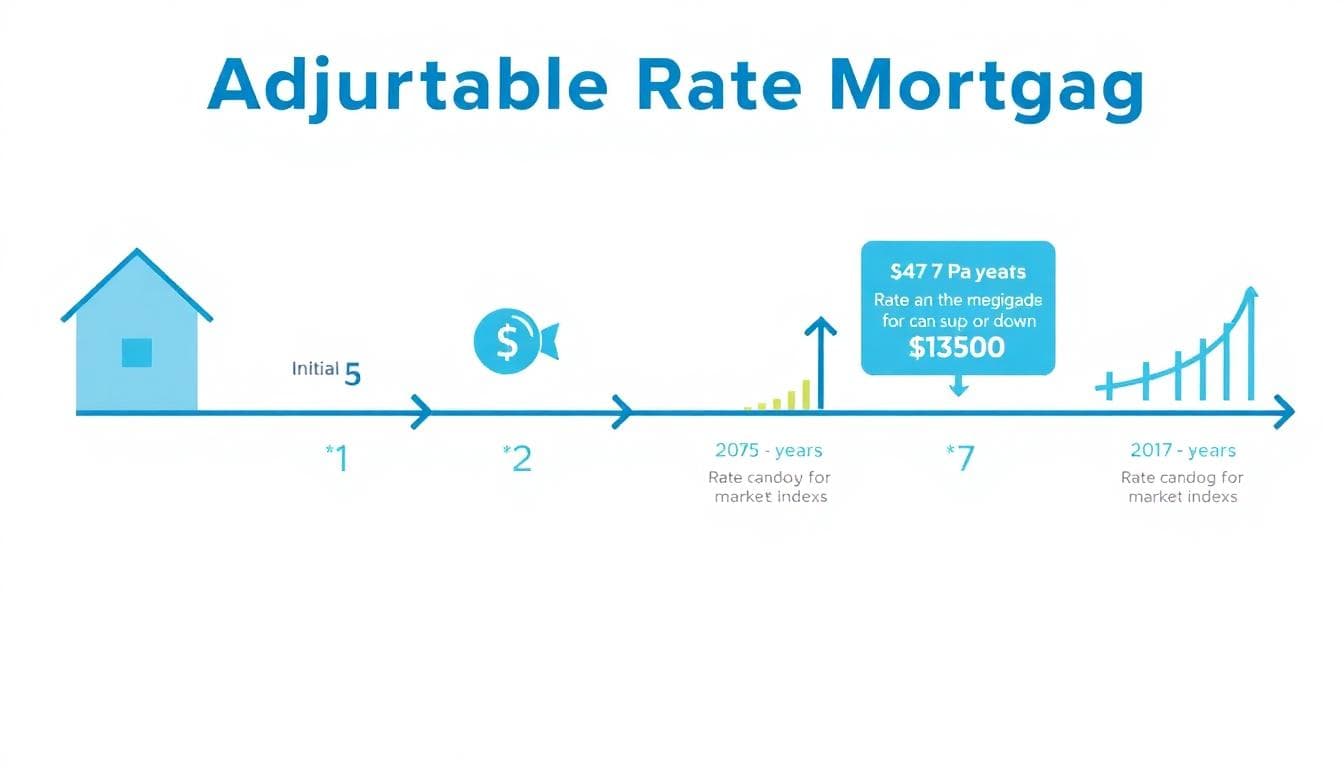
Infographic showing an ARM timeline with a low fixed period followed by adjustable periods and payment icons Image created with AI. Visual timeline of an ARM: fixed intro period, then adjustments based on a market index with caps.
Pros of Adjustable-Rate Mortgages

ARMs can make a tight budget work in the early years, which is why they are popular in high-cost markets and with buyers who plan to move or refinance before the first reset.

  • Lower starting payment: As of October 2025, many 5/1 ARMs start near 5.57% according to Mortgage Reports’ daily rate survey. On a $300,000 loan, principal and interest are about $1,720 per month. A 7% fixed-rate loan is about $1,996. That early gap, roughly $275 per month, can help with cash flow, childcare, or savings.
  • Afford more home, earlier: The lower intro rate can improve your debt-to-income ratio, which may qualify you for a better home in a competitive area.
  • Potential for rate drops: If the index falls by the time your rate adjusts, your payment can decline. Tracking averages from Freddie Mac’s PMMS helps you see broader rate moves over time.
  • Strong fit for short timelines: If you plan to sell in 5 to 7 years, or you expect a clear income jump, the intro period can match your life plan. Many buyers use ARMs as a bridge to a later refinance when credit, savings, or rates improve.
  • ** Caps limit worst-case jumps**: ARMs set guardrails. A common cap set is 2/1/5:
    • Initial cap: The first adjustment can move up to 2 percentage points.
    • Periodic cap: Future yearly changes are limited to 1 percentage point.
    • Lifetime cap: Total increases are capped at 5 points above the start rate.

Quick example, simplified:

  • Loan: $300,000, 5/1 ARM at 5.57%
  • Years 1 to 5: About $1,720 per month for principal and interest
  • If you move or refinance before year 6, you keep the savings and avoid future resets

Cons of Adjustable-Rate Mortgages

ARMs shift more risk to you after the fixed period. That risk can be manageable with planning, but you should size it up before you sign.

  • Payment shock after year 5 or 7: After the fixed window, your rate resets to index plus margin. If the new rate is 7.5% in year 6, the payment on a $300,000 balance over the remaining 25 years could land near $2,200, up roughly $500 per month from the intro period. Caps can soften the jump, but they do not remove it.
  • Harder to budget long term: You will not know your exact year-6 payment until the reset date approaches. That makes long-term planning tougher than with a fixed loan.
  • History shows rates can swing: Long stretches of low rates can end quickly. For context, average mortgage rates climbed sharply in 2022, as tracked in this long-run view of mortgage rate history. An ARM can benefit if rates fall, but it will pass through higher costs if rates rise.
  • Refinance is not guaranteed: If home values dip, or your income or credit changes, a planned refinance may be hard or costly. Your budget needs room for that “what if.”

Safeguards to use:

  • Know your index and margin: These set your future rate. Ask your lender to show your estimated rate at several index levels.
  • Confirm all caps in writing: Initial, periodic, and lifetime. Caps are your safety rails.
  • Stress test your budget: Price your payment at the lifetime cap. If that number breaks your budget, rethink the loan.
  • Align the intro period with your plan: Choose 7 or 10 years if you want more cushion. Many 2025 buyers in high-cost areas are choosing longer-fixed ARMs to stretch affordability while lowering the odds of an early reset. For current market ranges and limits, see the overview of ARM rates at Bankrate.

Bottom line:

  • Great when you want lower payments now and have a clear exit plan before the first reset.
  • Risky when your timeline is fuzzy or your budget is tight after year 5 or 7.

Key terms, made simple:

  • 5/1 ARM: Fixed for 5 years, adjusts once per year after.
  • Index: The market rate your loan tracks.
  • Margin: A fixed add-on set by your lender.
  • Caps: Limits on how much the rate can rise at each step and in total.

Fixed vs. Adjustable: How to Decide Which Fits Your Life

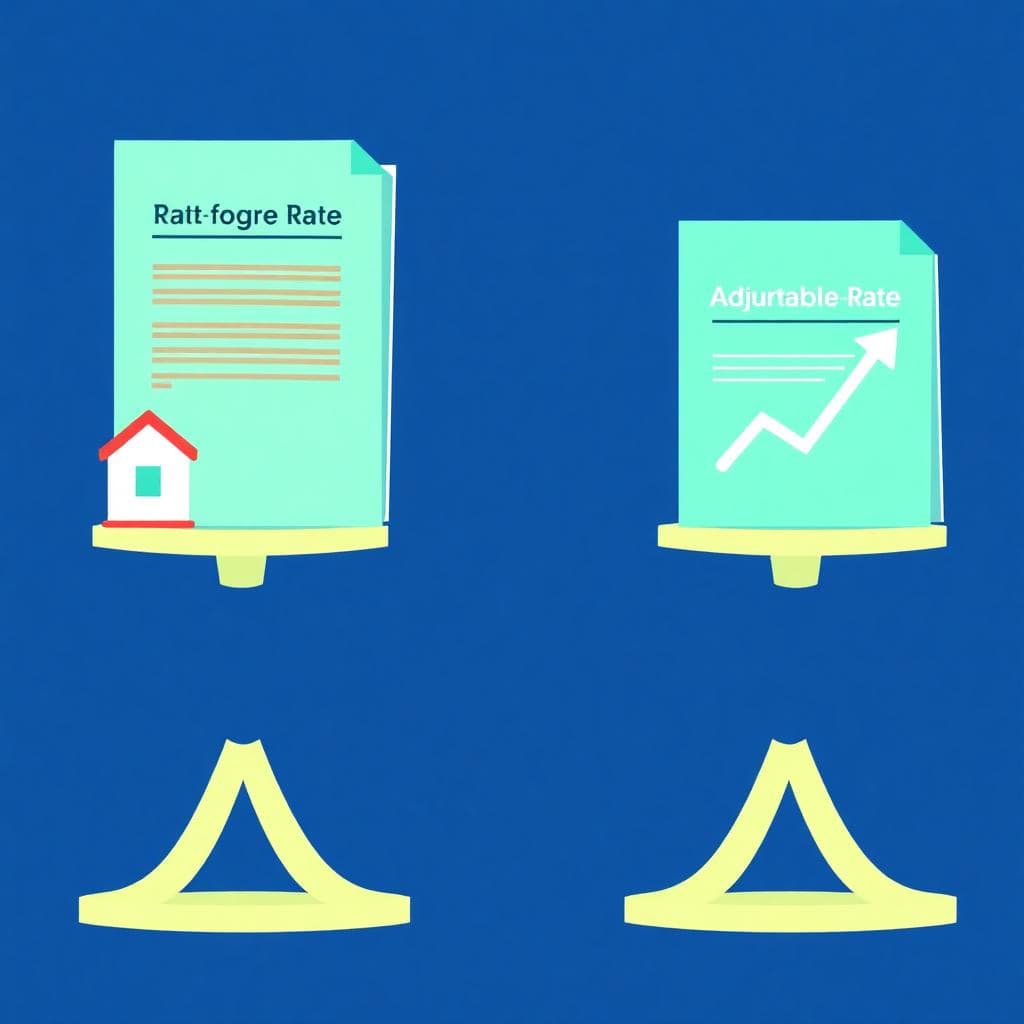
Illustration of a scale comparing fixed and adjustable mortgage documents with icons for stability and change Image created with AI. A visual comparison of fixed vs. adjustable mortgages.

Both loans can work. The right choice depends on how long you will keep the home, your comfort with risk, and today’s rate backdrop. In late 2025, fixed rates have steadied near the high-6 to low-7 range, while some ARMs still show lower intro rates. Stability favors fixed for most stay-put buyers, while near-term movers may prefer the lower starting cost of an ARM. For rate context, see the latest trend data from Freddie Mac’s PMMS.

Key Differences in Costs and Risks

Use this quick side-by-side to frame the decision. Numbers below use a $300,000 loan for clarity.

  • Initial rate
    • Fixed: About 7% in October 2025.
    • ARM: About 5.57% to start, then changes after the fixed period.
  • Monthly payment (years 1 to 5)
    • Fixed at 7%: About $1,996 for principal and interest.
    • ARM at 5.57%: About $1,720, a savings near $275 per month.
  • Payment changes
    • Fixed: No changes. Budget stays steady.
    • ARM: May reset up or down after the intro period, subject to caps.
  • Total interest over time
    • Fixed: Predictable. Over 30 years at 7%, total interest is about $418,000.
    • ARM: Lower interest in the first years, but long-run cost depends on future resets. If the rate rises to 7.5% in year 6, the payment could land near $2,200, cutting early savings and adding uncertainty.

Example table idea for the full post:

  • Years 1 to 5: ARM wins on payment and interest paid.
  • Years 6 to 30: Fixed wins on certainty, ARM outcome depends on where rates move.

For a clear primer on how ARMs adjust and why caps matter, review this guide from the Consumer Financial Protection Bureau.

When to Choose Each Type

A real estate agent explains mortgage options to clients in an office setting. Photo by RDNE Stock project

  • Choose fixed if you plan to stay 10 or more years, you value stable payments, or your budget leaves little room for jumps. Families putting down roots, or anyone with a tight monthly margin, tend to sleep better with a fixed rate.
  • Choose an ARM if you expect to move or refinance within the intro period, you want lower payments now, or you think today’s fixed rates look high and could ease later. Young professionals on a 3 to 7 year horizon often fit this profile.

Ask yourself:

  • Do you value predictability over potential savings?
  • How likely are you to move or refinance before the first reset?
  • Can your budget handle the payment at the lifetime cap?
  • Will the lower ARM payment help you meet other key goals?

Next step: price both options, run a worst-case stress test for the ARM, and talk with a lender about caps, margins, and break-even timing.

Conclusion

Fixed-rate and adjustable-rate mortgages both serve clear needs. Fixed-rate mortgages lock in a stable monthly payment, which protects your budget and keeps stress low. In October 2025, with many fixed quotes near 7%, that stability still looks attractive while rate trends remain uncertain. Adjustable-rate mortgages offer lower starting payments and can free up cash in the early years, yet they shift more risk to you after the fixed window.

Choose the loan that matches your time horizon and cash flow. If you plan to stay put or you value steady payments, a fixed-rate mortgage is the safer pick. If you expect to move or refinance within the intro period, an ARM can deliver near-term savings. Price both options side by side, then stress test the ARM at its caps so you know your ceiling.

Now is the time to run the numbers. Use a mortgage calculator, review your budget at several payment levels, and ask a trusted loan officer to model scenarios for index plus margin, caps, and refinance timelines. A short call with a local advisor can clarify tradeoffs in minutes.

Thanks for reading. Ready to take the next step toward a home loan that fits your life? Compare quotes today and move forward with confidence.

Mortgage Pre-Approval in Chicago: Our Complete 2025 Guide

0

Eyeing a cozy Logan Square condo or a family house in Lincoln Park? We get the excitement, and we also know the competition. If you’re ready to make Chicago your home, mortgage pre-approval puts you ahead.

Mortgage pre-approval is simple—unlike a basic prequalification, which is just an initial chat. A lender reviews your income, credit, debts, and savings, then gives a written estimate of how much you can borrow. It is not the final loan, but it is a strong signal that you are a qualified and serious buyer.

Why it matters in Chicago. Well-priced homes near the Red Line, Blue Line, or Metra lines often get multiple offers. Sellers want proof you can close, and a fresh pre-approval gives you a competitive advantage, moving your offer to the top of the pile.

Rates matter too. As of October 2025, the average 30-year fixed rate is around 6.33%. That shapes your home price budget, monthly payment, and what neighborhoods fit, from Lakeview two-flats to Avondale walk-ups. Start with an affordability calculator to get a quick sense of your limits early in the process.

Local factors can shape your plan. Chicago’s brutal winters make garage parking a big deal in River North and West Town, which can raise prices. Spring brings more listings, summer brings crowds, and many sellers list again after Labor Day, so timing your pre-approval keeps you ready.

We also think about the commute. If you need the Blue Line to O’Hare or the Red Line to the Loop, we help you target buildings and blocks that fit your travel time. Metra riders heading to North Shore offices can focus near Ravenswood or Edgewater for faster trips.

Costs add up fast, so we keep an eye on fees. Most Chicago lenders charge between $2,500 and $5,000 in origination fees on a typical $500,000 purchase, and there are ways to negotiate these costs down. A clear pre-approval also helps you lock in closing credits with confidence.

We have helped hundreds of Chicago families through this process. In this guide, we show you how mortgage pre-approval works, what documents you need, how to read your numbers, and how to win in a competitive market. Let’s get you ready to tour on Saturday and make an offer by Sunday.

What Is Mortgage Pre-Approval and Why Do You Need It in Chicago?

Mortgage pre-approval confirms your income, credit, debts, and assets, then issues a preapproval letter that provides a clear budget, lending limit, and rate estimate you can shop with. Unlike a simple prequalification, which is often just an initial chat without full documentation, pre-approval involves a deeper review for more reliability. In Chicago, it doubles as your proof of funds, which is key when homes near CTA and Metra hubs attract multiple offers. With average 30-year rates around 6.33%, locking a clear budget helps you sort Logan Square condos from Lincoln Park townhomes with confidence, and move fast when the right place hits the market.

A young couple receiving a mortgage pre-approval letter inside a modern Chicago bank branch with the skyline visible. Image created with AI.We also use pre-approval to compare lenders and fees, including various loan options. It is smart to request quotes from at least two local and national lenders on the same day, then negotiate. As forecasts point to steady but moderate growth in 2025, pre-approval keeps you ready for more listings in spring and early fall. For market context, see the outlook on Chicago housing trends for 2025 from Liberty Bank and the broader Illinois real estate forecast for 2025.

How Pre-Approval Strengthens Your Offer in Competitive Chicago Neighborhoods

Pre-approved buyers touring a Logan Square condo in spring with a CTA Blue Line train approaching the station. Image created with AI.In Logan Square, we see pre-approved buyers close faster on condos because they clear underwriting hurdles early through lender verification of assets and income. Sellers want deals that stick. A fresh preapproval letter, proof of funds for the down payment, and a short financing timeline can beat offers that look bigger on price but are vague on financing.

Many Chicago sellers also prefer pre-approved owner-occupants over investor bids when terms are close, building seller confidence in a smoother process. Why would that happen if a cash offer is in the mix? Owner-occupants often accept minor inspection items, offer flexible possession, and plan to care for the home. When price and timing are similar, a clean pre-approval can win out against an investor seeking concessions or steep discounts.

Proximity to transit adds weight. In Avondale, listings near the CTA Blue Line and major bus routes draw more showings. A bulletproof pre-approval signals you can lock rate, meet appraisal timelines, and hit a tight close even when competition spikes near transit nodes.

Seasonal timing matters. Chicago’s spring brings more listings before the summer rush. Get pre-approved by March so you can tour aggressively in April and May and write on the first weekend. If you wait until June, you compete with more buyers and risk rate bumps.

Rates around 6.33% make comparison shopping real money. Use pre-approval to review rate sheets and points across a few lenders, for example, a national bank and a Chicago portfolio lender. Ask for a same-day Loan Estimate so you can compare apples to apples on rate, points, and lender fees.

Quick wins we apply in bidding:

  • Reduce your financing contingency to 14 to 21 days with a strong pre-approval to shorten closing time.
  • Include a verification of assets with your offer to back the down payment.
  • Ask your lender to call the listing agent after you submit the offer.

A fast close starts with clean paperwork. Underwrite income and assets upfront, not after the offer. That helps you shave a week off the timeline. With financing secured early, you’re positioned as a serious buyer ready to act.

Pre-Approval for Different Chicago Buyers: First-Timers to Investors

Pre-approval is not one-size-fits-all. Your budget, credit profile, and timeline drive the strategy.

  • First-time buyers, ages 25 to 35, incomes $60,000 to $120,000: We ease down payment worries with clear options. Many buyers put 3 to 10 percent down on condos in Logan Square, Avondale, or Pilsen and keep cash for reserves. Aim for a 680+ credit score for better pricing; a 740+ score often secures lower rates and fewer points. Ask lenders to quote lender-paid mortgage insurance and compare to borrower-paid MI to lower your monthly payment.
  • Move-up buyers, ages 30 to 45, incomes $100,000 to $200,000: Coordinate your sale and purchase with a pre-approval that models both scenarios, factoring in your debt-to-income ratio. We often prep two letters, one assuming your current home sells first, one with a higher reserve requirement if it does not. This helps you write on Lincoln Park, Lakeview, or North Center homes without making risky assumptions. Consider a bridge loan or a recast plan if you receive sale proceeds after closing.
  • Investors: In neighborhoods like River North or West Town, specialized loans matter. Ask for DSCR loan quotes, 15 or 30 percent down options, and interest-only periods to boost cash flow. A pre-approval that includes projected rent comps and reserves makes your offer stronger, especially for buildings with active rental demand near CTA or Metra stops. Prepare for tighter appraisal scrutiny on mixed-use or non-warrantable condos.
  • Relocating professionals: Tight timelines call for a fast-start file. Use an employer offer letter, asset statements, and a Chicago-focused lender who can close in 21 days. Target commuter-friendly hubs near the Blue Line to the Loop, the Red Line for North Side jobs, or Metra stops in Ravenswood and Edgewater. Ask your lender to verify condo building documents early to avoid surprises.

Honest credit score tips we use every week:

  1. Pay all revolving balances to under 10 percent of the limit 30 days before application.
  2. Avoid new credit pulls while house hunting.
  3. Ask lenders to run a rapid rescore if errors suppress your score.

Use pre-approval to compare lenders on the same day. National banks like Wells Fargo or Bank of America can be competitive on rates, while local Chicago lenders may move faster on condos or buildings with quirks. With rates near 6.33%, every eighth of a point affects monthly payment and approval amount. A tight pre-approval helps you pick the best fit, write confident offers, and close on time.

Step-by-Step Guide to Getting Mortgage Pre-Approval in Chicago

Mortgage pre-approval sets your budget, speeds up offers, and helps you compare lenders with real numbers. In Chicago, timing, transit access, and seasonal workflows all shape how fast you get it. Here is the process we use with buyers from Logan Square to Lincoln Park, and what to prep before you hit your first open house.

Gathering Your Documentation and Choosing Chicago Lenders

Ultra realistic photo of a Chicago apartment with a young professional organizing W-2s, bank statements, and debt documents on a wooden desk, with the skyline visible. Image created with AI.Start with clean documentation. Lenders move faster when your documentation is complete.

  • For income verification: two years of W-2s and full federal tax returns
  • Last 30 to 60 days of pay stubs
  • Two to three months of bank statements, all pages
  • Retirement and brokerage statements if using reserves
  • Photo ID and current housing history
  • Full list of debts, including student loans, auto, and credit cards

Helpful add-ons:

  • Self-employed or seasonal income, common in hospitality or events around the Loop and Near North Side: include two years of full tax returns, year-to-date profit and loss, and 1099s.
  • Recent job change: include your offer letter or employment contract.
  • Gift funds: provide a gift letter and proof of transfer.

Choose lenders with Chicago experience. Pair one local option with one national bank so you can compare rate, points, and condo expertise.

  • Local pick with Chicago market insight: Liberty Bank for Savings tracks neighborhood trends and condo quirks.
  • National pick with many city branches: large banks like Bank of America can be competitive on pricing and have in-branch support.
  • For a wider lens on options, scan the editors’ list of Best Illinois mortgage lenders of 2025 and a current roundup of top mortgage lenders.

Relocating to Chicago? If you fly in and out of O’Hare, a lender with an office near Rosemont or the O’Hare corridor can streamline in-person verifications. It sounds small, yet it helps when you are signing final disclosures between flights.

Pro tip for speed: upload PDFs named by document type, for example, “2024_W2_YourName.pdf,” and avoid screenshots. Clear files shorten underwriting by a day or two.

Submitting Your Mortgage Application and What Happens Next

Ultra realistic photo of a diverse couple submitting a mortgage application to a loan officer in a bright Chicago bank near the Loop. Image created with AI.Once you submit your mortgage application, underwriting starts. Most lenders review income, perform a credit check, and assets in 1 to 3 business days. Some will run a same-day desktop underwrite if your file is clean. This process typically involves a hard credit inquiry to assess your full financial picture, unlike a soft credit inquiry that might be used for initial rate shopping without impacting your score.

What you receive:

  • A preapproval letter that states your max loan amount, loan type, and conditions. Example: with $100,000 household income, solid credit, and typical debts, your letter may show up to $400,000, subject to appraisal and verification.
  • A loan estimate that shows rate, points, and fees so you can compare offers line by line.

What happens next:

  1. Your loan officer may ask for clarifications, like large deposit letters or missing pages in statements. Respond within 24 hours to lender questions and keep momentum.
  2. You use the letter to tour homes and submit offers. We often ask the lender to tailor the letter to the list price for privacy.
  3. If you do not go under contract in 60 to 90 days, renew the formal preapproval. Update pay stubs and bank statements so the data stays current.

Chicago cost note: closing costs in the city often run 2 to 5 percent of the loan amount. On a $400,000 loan, that is about $8,000 to $20,000. This includes lender fees, title, recording, transfer taxes, and prepaid interest.

Seasonal timing helps. Approvals move faster in early spring and early fall. Avoid holiday weeks like Thanksgiving and the week between Christmas and New Year’s when appraisers and processors have limited hours. If you aim to buy near CTA or Metra hubs in peak months, lock your pre-approval at least two weeks before heavy touring.

Quick checklist for a smooth finish:

  • Keep credit card balances low and do not open new accounts to protect your credit record.
  • Freeze large cash movement unless cleared by your lender.
  • Ask your lender to call the listing agent when you submit an offer, which boosts seller confidence on busy listings near the Blue Line or Red Line.

Mortgage pre-approval is about speed and clarity. Tight paperwork, local Chicago insight, and a responsive lender help you write strong offers and close on time.

Key Chicago Factors That Affect Your Mortgage Pre-Approval

Chicago market dynamics shape how much you can borrow, what payment you can handle, and when to write offers. We track rates, inventory, and neighborhood trends so your Mortgage pre-approval reflects real Chicago conditions, not national averages.

Young couple reviewing Chicago housing rate and price charts in a modern living room with Lake Michigan in the background. Image created with AI.### Current Chicago Market Trends and Interest Rates in 2025

The current interest rate sits near 6.33% for a 30-year fixed as of October 2025. Most projections keep rates in the mid-6 percent range into year end, which means budgets and buying power should be stable. For many first-time buyers, this steadiness helps plan payments with fewer surprises.

Illinois Realtors’ monthly outlooks point to steady activity in the Chicago metro, without dramatic swings in sales or prices. That lines up with what we see on the ground, with prices leveling off and days on market normalizing. For context, review the metro snapshots in the Illinois Housing Market Forecast, March 2025 and the updated May 2025 forecast. For recent monthly stats, the statewide Market Stats center is a useful benchmark while you shop.

What this means for your Mortgage pre-approval:

  • Rate planning: Price your letter at 6.25 to 6.5 percent interest rate to stress test your payment.
  • Payment comfort: Keep a cushion for insurance and taxes, which vary by neighborhood and property type.
  • Timing: You shop now before potential dips. If rates drop, you can revisit pricing or ask about a float-down option. If they rise, you already locked clarity.

Quick example: a $450,000 purchase with 10 percent down payment at 6.375 percent lands a principal and interest payment near the mid-$2,500s. A one-eighth point shift moves that needle by about $35 to $50 per month, which can change approval amounts in tight debt-to-income files.

Transportation, Neighborhoods, and Seasonal Timing Tips

Transit access often boosts value and competition. In Lincoln Park, homes within easy walking distance to CTA Red or Brown Line stops are often priced 10 to 15 percent higher than similar homes farther from stations. That premium reflects faster commutes to the Loop, better walkability, and strong renter demand if you plan to house-hack.

Seasonal planning saves money and stress:

  • Winter: Older masonry or frame homes can have higher heating costs. Build a line item for utilities and consider inspection extras like thermal imaging. A higher winter carrying cost can reduce your approval headroom if you ignore it.
  • Spring: Avondale sees more new listings between March and June. More supply can mean better choices and less pressure to waive protections. Have your letter refreshed by March so you are ready for the first wave.
  • Early fall: After Labor Day, families list again before winter. We often see motivated sellers who will cover a point or help with closing credits when traffic dips.

Where to focus if you commute:

  • North Center: Balanced single-family and condo options, strong schools, and quick access to the Brown Line. Pre-approval here should factor higher taxes on larger lots.
  • Logan Square and Avondale: Blue Line access for O’Hare and downtown, many condo conversions, and growing restaurant clusters that attract buyers. Condos with strong reserves and low HOA risk help underwriting.
  • Ravenswood and Edgewater: Metra and Red Line options for North Side and suburban office commutes. Pre-approval should model potential special assessments in older vintage buildings.

How this shapes your letter:

  • Ask your lender to price a condo and a single-family scenario. HOA dues or higher heating costs change your debt-to-income ratio.
  • Include two rate scenarios in your planning worksheet, for example 6.25 and 6.5 percent.
  • If you plan to bid near a CTA or Metra hub, request a same-day update of your pre-approval letter during showings. Clean paperwork and a lender call to the listing agent often wins tight offers.

We have seen smart seasonal timing save thousands in price, points, or seller credits. Pair that strategy with a Chicago-focused pre-approval and you will make stronger, faster moves when the right listing hits your feed.

Homebuyers comparing commute options near a CTA station in Lincoln Park, with trains and neighborhood streets visible. Image created with AI.## Conclusion

Mortgage pre-approval gives you real buying power in Chicago’s market. With 30-year rates hovering near 6.3% this October, clarity on budget and fees helps you move fast on the right place, from a Logan Square condo to a Lakeview family home or a Lincoln Park brownstone—before advancing to the full loan commitment stage.

We recommend a tight file, two lender quotes on the same day, and smart cost control. Most Chicago lenders charge $2,500 to $5,000 in origination fees on a $500,000 purchase, and many will negotiate points or credits when you ask. Transit access adds pressure near CTA Red and Blue Line stops and key Metra stations, so a fresh letter and a fast lender call to the listing agent can set your offer apart.

Seasonal timing still matters. Renew your letter by March for the spring surge, shop again after Labor Day when motivated sellers return, and factor winter realities like higher heating costs and the premium for garage parking in River North and West Town. A clean pre-approval, priced at current rates, keeps your plan steady if the market shifts.

Contact us or a local lender today, we have helped hundreds start their journey. What is your top priority, a shorter commute or more space for the budget you set? Your Chicago dream home awaits with the right pre-approval.