

Buying a home can feel exciting and stressful at the same time. The right mortgage can steady your budget, the wrong one can strain it for years. Getting clear on your options is the most important early step.
A fixed-rate mortgage keeps the interest rate the same for the life of the loan. Your monthly principal and interest stay steady, which makes planning simple and stress low.
An adjustable-rate mortgage (ARM) starts with a fixed teaser period, then the rate can change at set intervals. Your payment may go up or down based on the market and the loan’s caps.
Here is what to expect in this guide. You will learn how each loan type works, where the monthly payment risk sits, and who each option suits. We will cover pros and cons, common mistakes, and smart ways to compare offers.
We will also touch on current numbers. As of October 2025, many fixed-rate quotes sit around 7%, while some ARMs start near about 5.57% before future resets. Rates vary by credit, down payment, points, and lender, so think of these as ballpark figures.
If you value simplicity, fixed loans win on predictability and peace of mind. If you plan to sell or refinance within the intro period, or you want a lower starting payment, an ARM can help you save early. The tradeoff is that future payments carry rate risk.
You will leave with a clear checklist to pick the best fit for your timeline, cash flow, and risk comfort. We will break down how to read lender quotes, compare APRs, and weigh fees like points and caps.
Take a breath. You do not need to be a finance pro to make a strong choice. Start with your budget, your time horizon, and the rate range you qualify for, then use the steps ahead to lock in a mortgage that supports your long-term goals.
Adjustable-Rate Mortgages: Lower Starts with Some Risk
 Photo by RDNE Stock project
An adjustable-rate mortgage, or ARM, gives you a fixed rate for an initial period, then the rate adjusts at set intervals. A 5/1 ARM holds the same rate for 5 years, then adjusts once per year. A 7/1 ARM fixes the rate for 7 years, then adjusts yearly. After the fixed window, the new rate equals an index (like Treasury or SOFR) plus a margin, and it can move up or down within caps.
Think of it like a gym membership with a promotional price. You pay less at first, then the fee can change based on the market. The catch is that your payment is not fully predictable after the intro period.
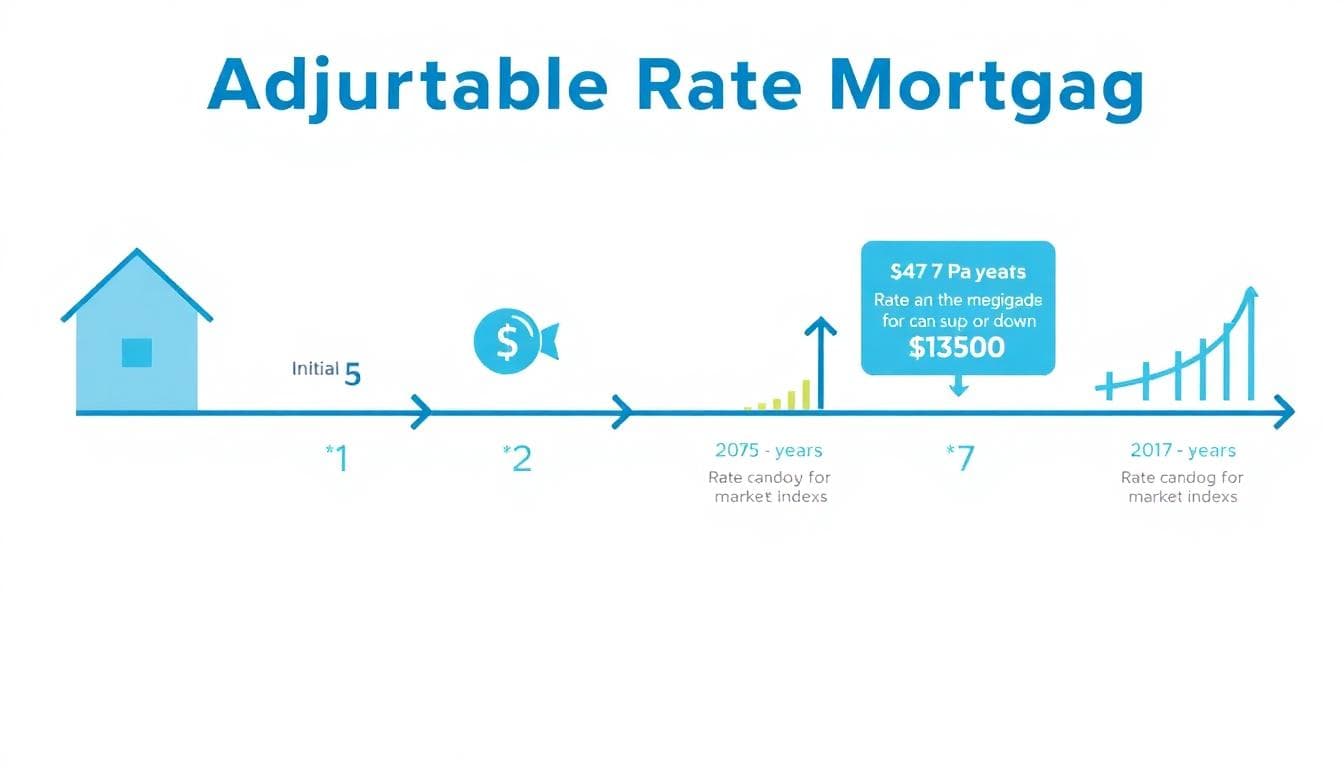 Image created with AI. Visual timeline of an ARM: fixed intro period, then adjustments based on a market index with caps.
Pros of Adjustable-Rate Mortgages
ARMs can make a tight budget work in the early years, which is why they are popular in high-cost markets and with buyers who plan to move or refinance before the first reset.
- Lower starting payment: As of October 2025, many 5/1 ARMs start near 5.57% according to Mortgage Reports’ daily rate survey. On a $300,000 loan, principal and interest are about $1,720 per month. A 7% fixed-rate loan is about $1,996. That early gap, roughly $275 per month, can help with cash flow, childcare, or savings.
- Afford more home, earlier: The lower intro rate can improve your debt-to-income ratio, which may qualify you for a better home in a competitive area.
- Potential for rate drops: If the index falls by the time your rate adjusts, your payment can decline. Tracking averages from Freddie Mac’s PMMS helps you see broader rate moves over time.
- Strong fit for short timelines: If you plan to sell in 5 to 7 years, or you expect a clear income jump, the intro period can match your life plan. Many buyers use ARMs as a bridge to a later refinance when credit, savings, or rates improve.
- ** Caps limit worst-case jumps**: ARMs set guardrails. A common cap set is 2/1/5:
- Initial cap: The first adjustment can move up to 2 percentage points.
- Periodic cap: Future yearly changes are limited to 1 percentage point.
- Lifetime cap: Total increases are capped at 5 points above the start rate.
Quick example, simplified:
- Loan: $300,000, 5/1 ARM at 5.57%
- Years 1 to 5: About $1,720 per month for principal and interest
- If you move or refinance before year 6, you keep the savings and avoid future resets
Cons of Adjustable-Rate Mortgages
ARMs shift more risk to you after the fixed period. That risk can be manageable with planning, but you should size it up before you sign.
- Payment shock after year 5 or 7: After the fixed window, your rate resets to index plus margin. If the new rate is 7.5% in year 6, the payment on a $300,000 balance over the remaining 25 years could land near $2,200, up roughly $500 per month from the intro period. Caps can soften the jump, but they do not remove it.
- Harder to budget long term: You will not know your exact year-6 payment until the reset date approaches. That makes long-term planning tougher than with a fixed loan.
- History shows rates can swing: Long stretches of low rates can end quickly. For context, average mortgage rates climbed sharply in 2022, as tracked in this long-run view of mortgage rate history. An ARM can benefit if rates fall, but it will pass through higher costs if rates rise.
- Refinance is not guaranteed: If home values dip, or your income or credit changes, a planned refinance may be hard or costly. Your budget needs room for that “what if.”
Safeguards to use:
- Know your index and margin: These set your future rate. Ask your lender to show your estimated rate at several index levels.
- Confirm all caps in writing: Initial, periodic, and lifetime. Caps are your safety rails.
- Stress test your budget: Price your payment at the lifetime cap. If that number breaks your budget, rethink the loan.
- Align the intro period with your plan: Choose 7 or 10 years if you want more cushion. Many 2025 buyers in high-cost areas are choosing longer-fixed ARMs to stretch affordability while lowering the odds of an early reset. For current market ranges and limits, see the overview of ARM rates at Bankrate.
Bottom line:
- Great when you want lower payments now and have a clear exit plan before the first reset.
- Risky when your timeline is fuzzy or your budget is tight after year 5 or 7.
Key terms, made simple:
- 5/1 ARM: Fixed for 5 years, adjusts once per year after.
- Index: The market rate your loan tracks.
- Margin: A fixed add-on set by your lender.
- Caps: Limits on how much the rate can rise at each step and in total.
Fixed vs. Adjustable: How to Decide Which Fits Your Life
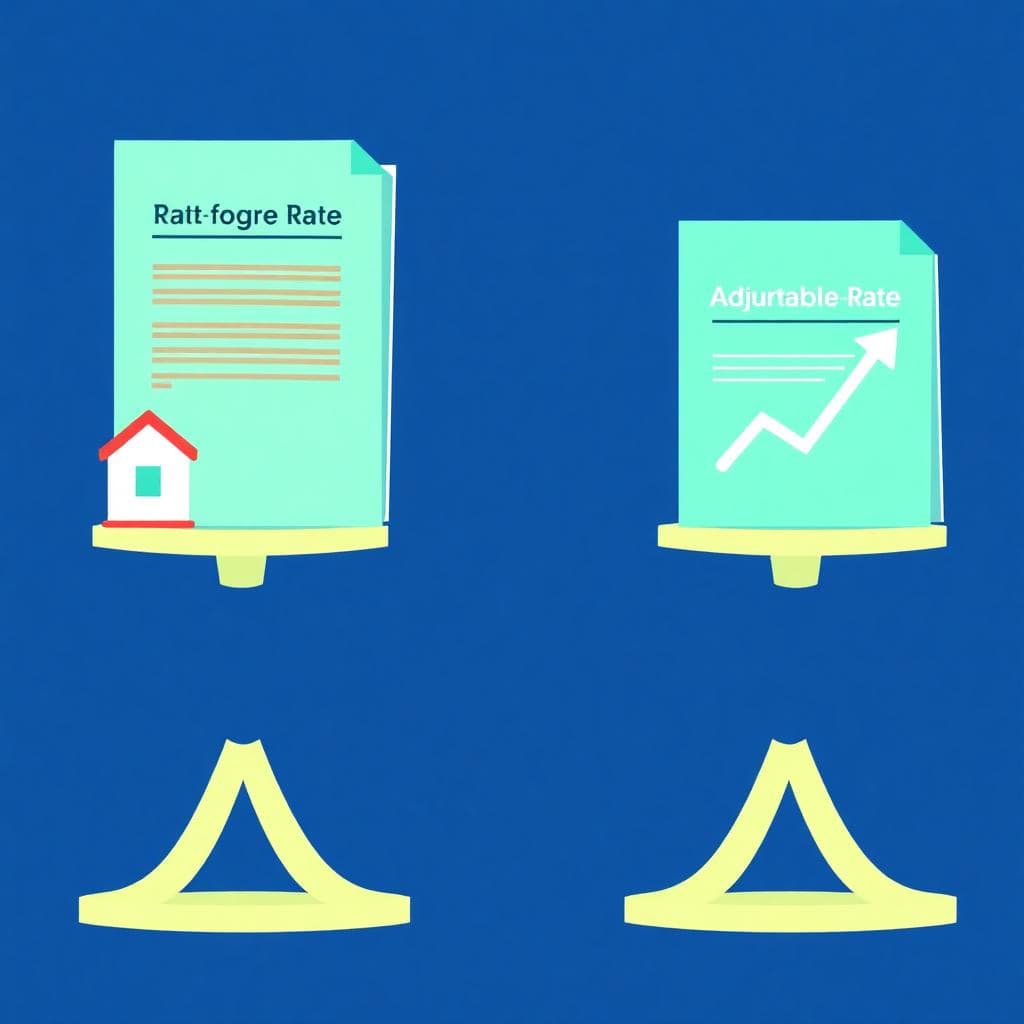 Image created with AI. A visual comparison of fixed vs. adjustable mortgages.
Both loans can work. The right choice depends on how long you will keep the home, your comfort with risk, and today’s rate backdrop. In late 2025, fixed rates have steadied near the high-6 to low-7 range, while some ARMs still show lower intro rates. Stability favors fixed for most stay-put buyers, while near-term movers may prefer the lower starting cost of an ARM. For rate context, see the latest trend data from Freddie Mac’s PMMS.
Key Differences in Costs and Risks
Use this quick side-by-side to frame the decision. Numbers below use a $300,000 loan for clarity.
- Initial rate
- Fixed: About 7% in October 2025.
- ARM: About 5.57% to start, then changes after the fixed period.
- Monthly payment (years 1 to 5)
- Fixed at 7%: About $1,996 for principal and interest.
- ARM at 5.57%: About $1,720, a savings near $275 per month.
- Payment changes
- Fixed: No changes. Budget stays steady.
- ARM: May reset up or down after the intro period, subject to caps.
- Total interest over time
- Fixed: Predictable. Over 30 years at 7%, total interest is about $418,000.
- ARM: Lower interest in the first years, but long-run cost depends on future resets. If the rate rises to 7.5% in year 6, the payment could land near $2,200, cutting early savings and adding uncertainty.
Example table idea for the full post:
- Years 1 to 5: ARM wins on payment and interest paid.
- Years 6 to 30: Fixed wins on certainty, ARM outcome depends on where rates move.
For a clear primer on how ARMs adjust and why caps matter, review this guide from the Consumer Financial Protection Bureau.
When to Choose Each Type
 Photo by RDNE Stock project
- Choose fixed if you plan to stay 10 or more years, you value stable payments, or your budget leaves little room for jumps. Families putting down roots, or anyone with a tight monthly margin, tend to sleep better with a fixed rate.
- Choose an ARM if you expect to move or refinance within the intro period, you want lower payments now, or you think today’s fixed rates look high and could ease later. Young professionals on a 3 to 7 year horizon often fit this profile.
Ask yourself:
- Do you value predictability over potential savings?
- How likely are you to move or refinance before the first reset?
- Can your budget handle the payment at the lifetime cap?
- Will the lower ARM payment help you meet other key goals?
Next step: price both options, run a worst-case stress test for the ARM, and talk with a lender about caps, margins, and break-even timing.
Conclusion
Fixed-rate and adjustable-rate mortgages both serve clear needs. Fixed-rate mortgages lock in a stable monthly payment, which protects your budget and keeps stress low. In October 2025, with many fixed quotes near 7%, that stability still looks attractive while rate trends remain uncertain. Adjustable-rate mortgages offer lower starting payments and can free up cash in the early years, yet they shift more risk to you after the fixed window.
Choose the loan that matches your time horizon and cash flow. If you plan to stay put or you value steady payments, a fixed-rate mortgage is the safer pick. If you expect to move or refinance within the intro period, an ARM can deliver near-term savings. Price both options side by side, then stress test the ARM at its caps so you know your ceiling.
Now is the time to run the numbers. Use a mortgage calculator, review your budget at several payment levels, and ask a trusted loan officer to model scenarios for index plus margin, caps, and refinance timelines. A short call with a local advisor can clarify tradeoffs in minutes.
Thanks for reading. Ready to take the next step toward a home loan that fits your life? Compare quotes today and move forward with confidence.